Your Basket

02 Oct
Posted By
0 Comment(s)
16 View(s)
The Different Types of Lanyard Clips: Which One Do You Need?
The clip on the end of a lanyard
is easy to overlook, but it decides how securely an ID card is held, how
quickly it can be swapped, and whether it will survive months of daily wear.
Pick the wrong one, and you'll soon see cards slipping off, staff struggling to
unclip passes at readers, or clips snapping within a few weeks.
We've supplied lanyards and ID
card accessories since 1987, so we've seen which types of lanyard clips hold up
in offices, schools, hospitals, construction sites, and at events. Below, we
explain each of the main clip types, where they work best, and how to choose
between them.
Why the lanyard clip matters
A lanyard has three working
parts: the strap, the safety breakaway at the back of the neck, and the clip at
the end. The strap takes care of comfort and colour, and the breakaway protects
the wearer. The clip is the part that actually holds your ID card, access card, or badge holder, so it has the biggest effect on whether cards stay put, how
easy they are to present at a reader, and how long the lanyard lasts before
something wears out. In some settings, such as MRI suites, the material the
clip is made from matters too.
The main types of lanyard clips
Lobster clips
A lobster clip, sometimes called
a lobster claw clip, is a small metal clasp with a spring-loaded lever that you
press with your thumb to open. When you let go, it closes into a complete loop,
so nothing can slide out. That closed loop makes it the most secure everyday
lanyard clip available, and it's the clip we fit to our pre-printed
STAFF lanyards, VISITOR
lanyards and CONTRACTOR
lanyards.
Lobster clips are ideal for
staff ID, visitor passes and access cards that stay on the lanyard all day. The
one drawback is the small lever, which can be fiddly for anyone wearing gloves
or with limited dexterity.
Trigger clips
A trigger clip is a J-shaped
metal hook with a sprung gate across the opening. You push the gate inwards to
attach a card holder or punched card, and it snaps shut behind it. Trigger
clips are quicker to use than lobster clips, and many swivel so the card can
turn to face forwards on its own.
That speed is why trigger clips
are popular in healthcare and at events, where people swap badges or attach
badge reels throughout the day. You'll find them on our 20mm
recycled polyester lanyards and on our NHS lanyards with double
and triple
breakaways. The gate is secure in everyday use, although it isn't a fully
closed loop like a lobster clip.
Dog clips
A dog clip works on the same
principle as the fitting on a dog lead: a sturdy hook with a sprung gate that
you push open to attach the card, which then springs closed by itself. It's a
little chunkier than a trigger clip and very robust, so it copes well with
heavy daily use in schools and busy workplaces.
Our 10mm
polyester lanyards with a metal dog clip are a popular budget-friendly
choice. The extra bulk is more noticeable on a slim 10mm strap, but most
wearers find the durability worth it.
Plastic clips
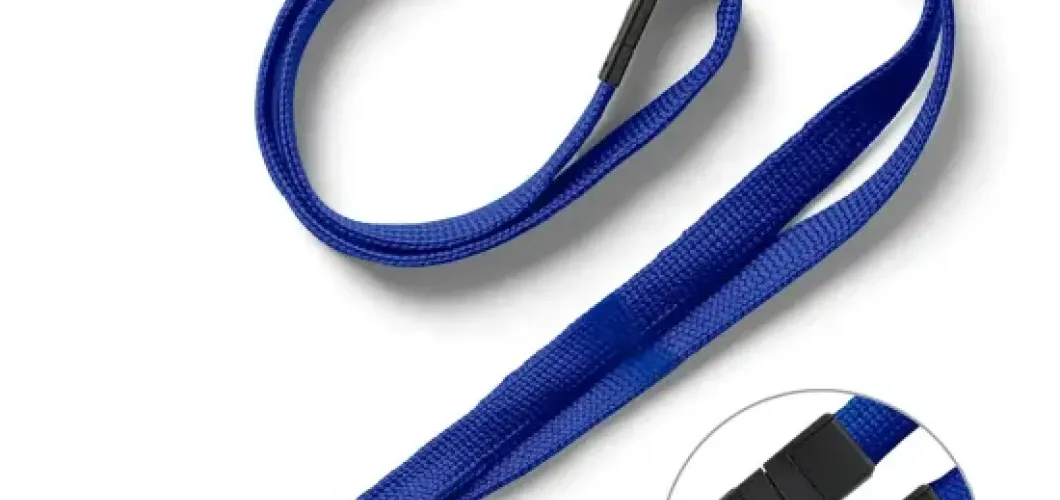
Plastic clips, often called
plastic J-clips or plastic dog clips, do the same job as metal hooks but are
lighter and completely metal-free. They're usually the most cost-effective
option and won't scratch cards or holders. Because they contain no metal, they're
also the right choice for MRI suites and sites with metal detectors.
We fit black plastic clips to
our NHS
lanyards with a plastic clip, VOLUNTEER
lanyards, and SIXTH
FORM lanyards, which suit schools, charities and large volunteer teams.
Plastic is less hard-wearing than metal over years of heavy use, so for
long-term staff lanyards a metal clip tends to last longer.
Other lanyard attachments
Beyond the four main clip types,
you may come across lanyards with other fittings. A split ring works like a
keyring and is better for keys, fobs and USB sticks than for ID cards. A
bulldog clip grips paper or card badges that have no slot or hole, which is
handy for printed event badges. A mobile phone loop is a thin cord for
attaching phones and small devices, and a detachable buckle partway down the
strap lets the wearer remove their card or keys without taking the lanyard off.
Double-ended lanyards have a
clip at each end of the strap. They attach to two slots on a landscape card,
which stops it from twisting so the photo and name always face forwards. If you need
any of these for a specific application, get in touch, and we'll help
you find the right option.
Lanyard clip types compared
|
|
Lobster clip |
Trigger clip |
Dog clip |
Plastic clip |
|
Security |
Highest (fully closed loop) |
High |
High |
Good |
|
Ease of use |
Moderate |
Quick |
Quick |
Quick |
|
Durability |
Very good |
Very good |
Excellent |
Good |
|
Metal-free? |
No |
No |
No |
Yes |
|
Best for |
Staff and visitor ID worn
all day |
Healthcare, events, badge
reels |
Schools and busy workplaces |
Metal-free settings,
volunteers, budget orders |
Safety breakaways and why they matter
The breakaway isn't the clip at
the end of the lanyard, but it's the most important safety feature on it. It's
a plastic connector at the back of the neck that pulls apart if the lanyard is grabbed
or caught on machinery, a door handle or equipment, then clips straight back
together afterwards. Every lanyard we sell has one fitted as standard.
For higher-risk settings such as
mental health wards, paediatrics and dementia care, our NHS lanyards are
also available with double or triple breakaways. Each additional breakaway is
another independent release point, which makes it even more likely the lanyard
will give way safely if someone pulls on it.
How to choose the right lanyard clip
Matching the clip to your card or holder
Every lanyard clip needs
something to hook onto. Punched cards, such as our FOTODEK
slot punch cards and hole
punch cards, attach directly to the clip, while unpunched cards need an ID
card holder. If you're using a double-ended lanyard with landscape cards,
choose cards
with two slot punches. It's best not to punch access control cards
yourself, as it's easy to cut through the internal antenna and stop the card from working.
Choosing a clip for your setting
Start with how the card is used.
If it stays on the lanyard all day, a lobster clip gives the most security. If
people regularly unclip their card or swap badges, a trigger or dog clip is
quicker, and for cards presented at readers throughout the day, a badge
reel on the end of the lanyard is often the most practical answer.
Then think about the environment
and budget. Healthcare and education settings should put breakaways first.
Metal-free areas need plastic clips, while outdoor, industrial and construction
sites benefit from tougher metal dog or lobster clips. For events and
short-term volunteer programmes, plastic clips keep costs down, but for staff
lanyards worn every day for a year or more, metal clips usually work out better
value.
What is the most secure type of lanyard clip?
The lobster clip is the most
secure type of lanyard clip. Its spring-loaded lever closes into a full loop,
so an ID card or holder can't slide off by accident.
What's the difference between a trigger clip and a dog clip?
Both are metal hooks with a
sprung gate that snaps shut after you attach a card. A trigger clip is usually
a slimmer J-shaped hook, often with a swivel, while a dog clip is a chunkier,
more heavy-duty design similar to the fitting on a dog lead.
Are plastic lanyard clips safer than metal ones?
Not for the wearer, as that job
belongs to the safety breakaway at the back of the neck. Plastic clips are
metal-free, though, which makes them the right choice for MRI suites and sites
with metal detectors.
Do all lanyards come with a breakaway?
Not every lanyard on the market
has one, but every lanyard we sell includes a safety breakaway as standard. Our
NHS lanyards are also available with double or triple breakaways for clinical
settings.
Can I attach an ID card directly to a lanyard clip?
Yes, as long as the card has a
slot or hole punch. Otherwise, use an ID card holder, which also protects the
card from wear and scratches.
Which lanyard clip is best for NHS staff?
Most NHS staff use a metal
trigger clip because it's quick to attach and remove. In patient-facing areas,
choose a lanyard with double or triple breakaways, and switch to a plastic clip
wherever metal-free equipment is required.
Find the right lanyard clip for your team
The right lanyard clip comes
down to how your cards are used. Lobster clips offer the most security, trigger
and dog clips are quicker day-to-day, and plastic clips suit budget orders and
metal-free areas. Whichever you choose, make sure there's a safety breakaway at
the back of the neck.
You can browse our full range of
plain lanyards,
pre-printed
lanyards and NHS
lanyards, all with no minimum order and same-day dispatch on in-stock items
ordered before 2:30pm. If you're not sure which clip suits your site, contact our UK-based team
and we'll help you choose, or ask about samples before placing a bulk order.