Your Basket

24 Aug

Posted By
0 Comment(s)
180 View(s)
Our Guide to Event Pass Printing
The UK events industry had its biggest year in a decade in 2025, worth an estimated £68.7 billion to the economy, with exhibitions alone contributing £11.5 billion and drawing an estimated 6.8 million visits to the UK's main exhibition venues.
Behind almost every one of those visits sits the same unglamorous detail: an access pass. Whether it's a laminated badge on a lanyard, a wristband at a festival gate, or a printed card at a corporate conference, the humble event pass is what turns a crowd into a controlled, accountable audience.
Get it right and nobody notices. Get it wrong, and you've either got queues building at the gate, unauthorised people wandering into areas they shouldn't, or a pass that's so easy to copy it stops meaning anything.
Why an event pass is so important
An event pass is doing several jobs at once, usually without the attendee thinking about any of them:
- Access control: proving someone is entitled to be where they are, whether that's the whole venue, a VIP area, or backstage.
- Quick identification: letting stewards, security, and other attendees tell staff, contractors, press, and general admission apart instantly, usually through colour coding.
- Fraud prevention: making the pass difficult enough to replicate that counterfeiting isn't worth the effort.
- Data capture: for conferences and exhibitions particularly, a barcode or QR code on a badge often doubles as the mechanism for lead retrieval, session check-ins, and attendance reporting.
That last point matters more than organisers sometimes expect. Ticket and pass fraud isn't a fringe problem in the UK: the Home Office and O2 revealed in August 2026 that ticket fraud losses reached £150 million over the previous year, with more than one in ten gig-goers surveyed having bought a fake ticket, rising to almost a third of 18-to-24-year-olds. Three-quarters of those fake tickets were bought through online platforms and social media rather than official channels.
Most of that fraud happens before the gate, at the point of sale, but a badge or pass that's easy to photocopy or reprint simply extends the same problem onto the day itself.
The main types of event passes
Not every event needs the same solution, and matching the pass to the event is usually the first decision to get right.
Laminated photo badges
The standard for conferences, exhibitions, and corporate events. A printed card, typically credit-card sized, with a photo, name, role, and organisation, worn on a lanyard or clip. They're durable enough to survive a multi-day event and easy to personalise with variable data for every attendee.
Wristbands
These are most popular for festivals and large-capacity events where speed through the gate matters more than individual identification. Tyvek (paper) wristbands are cheap and effective for single-day, single-use access; fabric and RFID wristbands are more common for multi-day festivals where re-entry, cashless payment, or tiered access (general admission vs VIP vs backstage) needs to be built in.
Lanyard and card combinations
Sitting in between, giving conference and exhibition organisers a badge that's visible from a distance thanks to colour-coded lanyards, while keeping the actual identification on a swappable, reprintable card.
Self-expiring or day-dated passes
These are worth a specific mention for multi-day events or sites with rolling contractor and visitor traffic, since a pass that visibly changes or voids after a set period removes the most common way passes get reused or passed on.
What goes on an event pass?
A well-designed pass balances information against clutter. At minimum, most events include:
- Name and organisation: the basics for a conference or exhibition badge.
- Role or access level: usually shown through colour coding (staff, exhibitor, VIP, press, contractor) so it can be read from across a room, not just up close.
- Photo: increasingly standard for higher-security or multi-day events, since a name alone does nothing to confirm the person wearing the badge is who they claim to be.
- Barcode or QR code: for scanning at entry points, session check-ins, or exhibitor lead capture.
- Date and validity: critical for multi-day events with different access on different days.
- Sequential numbering: a simple but effective way to track issued passes against a master list, and to flag duplicates instantly.
Materials and Sizes
Most event badges and passes are produced to the same CR80 standard size used for bank cards (85.6mm x 54mm), which keeps them compatible with standard card printers, holders, and lanyard clips regardless of who's producing them. From there, the main material decision is:
- PVC cards: the standard choice for reusable, durable, multi-day passes. They hold up to repeated handling, printing, and scanning far better than paper.
- Paper or Tyvek passes: cheaper and suitable for single-day or single-use events, particularly wristbands, where durability matters less than cost and speed of production.
- Laminated card with a paper insert: a popular middle ground for conferences, letting organisers reprint or swap out the paper insert (name, photo) without needing a new card holder each time.
Security features worth considering for event passes
The point of most badge security features isn't to stop a determined forger with professional equipment, it's to stop casual copying and make tampering obvious at a glance. Depending on the sensitivity of the event, options include:
- Holographic overlays or foiling, which are difficult to reproduce on a standard printer or photocopier.
- UV-visible printing, invisible under normal light but instantly checkable with a UV torch at the gate.
- Sequential barcoding, so any duplicate or out-of-sequence badge is immediately flagged by a scanner rather than relying on a steward spotting it.
- RFID or NFC encoding, increasingly common at multi-day festivals and conferences, where a pass needs to do more than look right, it needs to trigger correctly at a reader to grant access at all.
- Tamper-evident lanyards or wristbands, which visibly break or discolour if removed and reused. For most corporate and exhibition events, a well-designed printed badge with sequential numbering and colour coding covers the bulk of the risk. Higher-security events, backstage areas, press, VIP access, tend to be where the additional layers (RFID, holograms, UV) earn their cost.
Printing options for event passes
There are two broad approaches to producing passes, and most events land somewhere between them:
Pre-printed, bulk-produced passes
These are the most cost-effective route when your attendee list is finalised in advance. Names, photos, and access levels are printed ahead of the event and simply collected or issued on arrival. This works well for staff, exhibitor, and contractor passes where the list is known well ahead of time.
On-site or on-demand printing
These cover walk-up registrations, last-minute changes, and general admission at events where the full attendee list isn't confirmed until the day. This needs either on-site printing equipment and staff, or a print partner who can turn around variable-data badges at speed without every attendee queuing for ten minutes at the door. Most larger events use a mix of both: pre-printed passes for the confirmed staff, exhibitor, and VIP list, with on-site capacity held in reserve for the inevitable late registrations and replacements.
Planning timeline for event passes
6-8 weeks before
Confirm pass types, access tiers, and colour-coding scheme; finalise artwork and branding.
3-4 weeks before
Confirm attendee data format (CSV export from your registration platform) for variable data printing; order card stock, lanyards, and holders.
1-2 weeks before
Produce and quality-check pre-printed passes; test any barcode/QR or RFID scanning equipment against the actual pass batch, not just a sample.
On the day
Have on-site or on-demand printing capacity ready for late registrations, replacements, and lost passes; keep a small buffer of blank stock and holders on hand.
The benefits of outsourcing event passes
Producing passes in-house makes sense for small, one-off events with a short, confirmed attendee list and no need for high-security features. Beyond that, the maths tends to shift toward outsourcing to a specialist print bureau. This is because:
Quick turnaround time matters most when registration numbers or access requirements change close to the event, and a bureau used to same-day, and next-day print runs can absorb that far more easily than an in-house team doing it once a year.
Design and security features - Outsourcing allows for more options like foiling, holograms, sequential numbering, and RFID encoding are easy to get wrong the first time; a bureau that produces passes daily has already solved the common failure points.
No minimum order - Important for smaller events or organisations running several events a year at different scales, where buying in bulk "just in case" doesn't make financial sense. Whichever route you take, the underlying principle doesn't change: the pass is the cheapest, most visible layer of security an event has, and it's worth designing properly rather than treating as an afterthought once the guest list is finalised.
If you're planning an event and want passes designed, printed, and delivered without the guesswork, get in touch with the Castlemount team.
Related Products

Bestseller
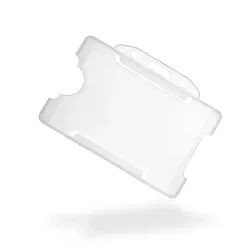
Evohold Clear Landscape Open-Faced ID Card Holders (Pack of 100)
These are open-faced, landscape ID card holders, made to hold one standard CR80 c..
£12.50
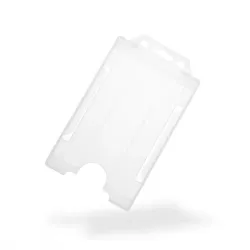
Evohold Clear Portrait Open-Faced ID Card HoldersThe Evohold Clear Portrait Open-Faced ID Card Holder is a practical and durable solution for displayi..
£12.50
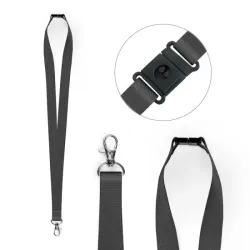
Black 20mm Recycled Polyester Lanyards with Metal Trigger ClipThese black 20mm polyester lanyards provide a practical and professional way to display ..
£15.00
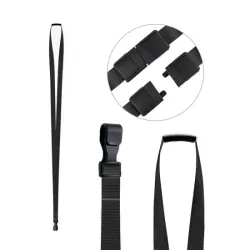
Black 10mm Economy RPET Lanyards with Plastic ClipThese black 10mm economy RPET lanyards offer a cost-effective way to display staff ID cards, visitor..
£6.50